
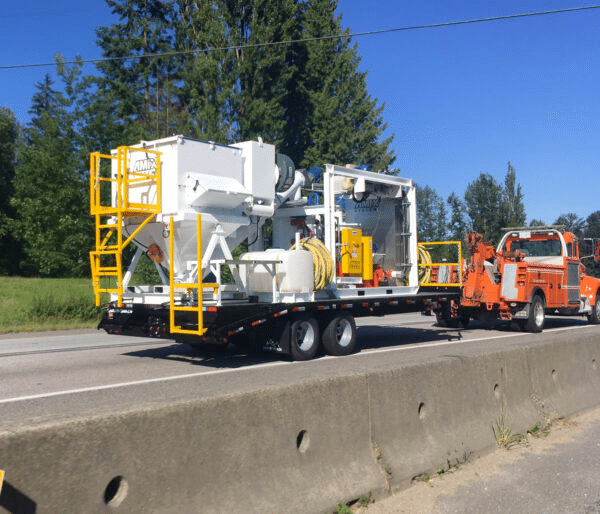
Pressure grouting equipment plays a crucial role in civil engineering projects, offering effective solutions for soil stabilization, structural reinforcement, and water control. This specialized machinery is designed to inject grout materials-such as cementitious mixtures, chemical grouts, or resins-into the ground or existing structures under controlled pressure. The primary objective of using pressure grouting equipment is to fill voids, cracks, and fissures within soils or concrete elements to enhance their strength and durability.
One of the fundamental applications of pressure grouting in civil engineering is ground improvement. When constructing foundations on weak or loose soils, engineers often face challenges related to settlement and bearing capacity. Pressure grouting helps mitigate these issues by injecting grout into the soil strata beneath foundations or slabs. This process compacts loose soil particles and fills cavities that might otherwise cause uneven settling or subsidence over time. By doing so, it increases soil density and load-bearing capacity, ensuring safer and more stable support for structures such as buildings, bridges, dams, and highways.
Another significant use of pressure grouting equipment is in controlling groundwater seepage during underground construction activities like tunneling or excavation below the water table. Water infiltration can weaken excavations by washing away fine particles from surrounding soils (a victaulic couplings benefits phenomenon known as piping), leading to potential collapses or delays. Grout injected through high-pressure pumps seals off permeable zones around tunnels or retaining walls by creating impermeable barriers that prevent water ingress. This waterproofing technique not only improves site safety but also reduces dewatering costs.
In addition to soil stabilization and water control, pressure grouting serves an important function in repairing damaged concrete structures such as bridges, parking garages, dams, and historic monuments. Over time concrete may develop cracks due to thermal expansion/contraction cycles, mechanical loads, corrosion of embedded steel reinforcement bars (rebar), or seismic events. Injecting epoxy-based resin grout into these cracks restores structural integrity by bonding fractured sections together while preventing further deterioration caused by moisture penetration.
The versatility of pressure grouting equipment extends beyond traditional construction tasks; it also supports specialty applications like underpinning existing foundations where additional support is needed without complete reconstruction. In mining operations too it stabilizes rock formations around shafts and tunnels enhancing worker safety.
Modern pressure grouting machines come equipped with precise controls for regulating injection pressures ranging from low values suitable for delicate repairs up to very high pressures required for deep foundation treatments involving permeation grout injections several meters below surface level. Portable units allow work in confined spaces whereas larger rigs handle extensive infrastructure projects efficiently.
In conclusion, the use of pressure grouting equipment in civil engineering significantly contributes towards improving ground conditions before construction begins while enabling effective maintenance solutions after project completion.